As Qurbani 2027 draws closer, many Muslims start preparing for Eid al-Adha and reflect on what Islam requires them to do. Along with these preparations, a familiar question is raised every year: Is Qurbani farz in Islam, or is it not mandatory?
This question comes up because Qurbani is widely observed, yet Islamic scholars do not all agree on its legal status. Some consider it obligatory for eligible Muslims, while others classify it as a strongly encouraged practice. These differences are based on how Islamic rulings are interpreted across schools of thought.
As Eid approaches, this lack of a single ruling often leads to uncertainty about who must perform Qurbani and who is exempt. Having a clear understanding of these views helps Muslims make informed decisions before the days of sacrifice begin.
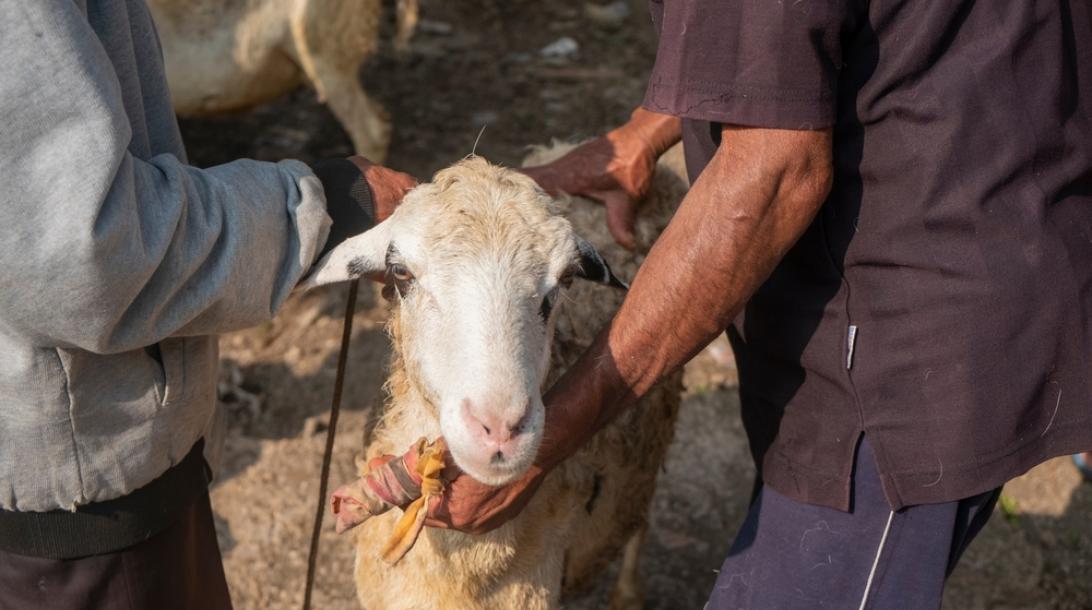
Qurbani, also called Udhiya, is the act of sacrificing an animal during Eid al-Adha. The sacrifice must take place after the Eid prayer and happens on the 10th, 11th, and 12th days of Dhul Hijjah. People usually sacrifice goats, sheep, cows, or camels, and the animals must meet Islamic requirements related to age, health, and treatment. Once the animal is slaughtered properly, the meat gets divided into three equal parts. One part stays with the person or family who offered it, one part goes to friends and relatives, and one part goes to those who are in need (poor).
However, Qurbani is not treated in the same way as the daily five obligatory prayers or fasting. It belongs to a separate category of worship, which is why scholars differ on whether it is compulsory.
This practice comes from the story of Prophet Ibrahim (AS). Allah (SWT) tested his obedience by commanding him in a dream to sacrifice his son Ismail (AS). Prophet Ibrahim (AS) was ready to follow the order. Right at the moment of sacrifice, Allah (SWT) sent a ram in place of Ismail (AS). Muslims do Qurbani every year to remember this test of faith, to show their own submission to Allah, and to thank Him for His blessings.
The purpose of Qurbani is to keep the memory of Prophet Ibrahim’s (AS) obedience alive. It helps feed poor families and cuts down the number of hungry people. It brings Muslims together during Eid celebrations, while also giving people a way to show gratitude for the wealth and food Allah has provided.
It depends on which school of thought a person follows. In the Hanafi school, which a lot of Muslims follow, Qurbani counts as wajib for those who qualify. That means it is obligatory, and you should not leave it out without a valid reason.
In the Maliki, Shafi’i, and Hanbali schools, it is seen as Sunnah Mu’akkadah. This is a strongly recommended act because the Prophet Muhammad (SAW) did it every year and told others to do the same. These schools do not list it as farz in the same way as the five prayers, and do not consider a person sinful for missing Qurbani, even if they can afford it. However, they do regard neglecting it without reason as undesirable.
Qurbani does not apply to every Muslim automatically. Obligation depends on personal circumstances.
According to Hanafi scholars, Qurbani is wajib on a Muslim who meets all the required conditions. The person must be an adult who has reached puberty, mentally sound and must not be travelling during the days of Qurbani. The person must also own wealth above their basic needs equal to the nisab amount.
Nisab is the same minimum used for Zakat. As of recent updates in 2027, it is about 87.48 grams of gold or 612.36 grams of silver, or the cash value of either. Many calculate using the silver amount because it is usually lower, so more people meet the threshold. This wealth is what remains after paying for essentials like home, food, clothes, and basic debts.
So, if your savings or assets reach this point, you are eligible for Qurbani.
To understand this issue, it is important to know the difference between farz and wajib.
Farz comes from direct commands in the Quran or clear Sunnah, like Salah, Zakat, Hajj, and Sawm (fast). Missing a farz act without excuse is considered a serious sin.
Wajib refers to actions that are also obligatory but are supported by strong evidence that is open to interpretation. According to Hanafi law, missing a wajib act intentionally is sinful, but its legal level remains below farz.
Hanafi scholars put Qurbani under wajib for eligible people. The other schools keep it as a Sunnah Mu’akkadah. Either way, most Muslims agree that missing it without excuse means losing out on major spiritual benefits.
Islamic law does not place the Qurbani responsibility on men only. Women follow exactly the same rules as men. If a woman has reached puberty, is mentally sound, is not travelling far during the days, and has wealth at or above Nisab, she must do Qurbani, according to the Hanafi view. For other schools, she is strongly encouraged to make the sacrifice. This applies whether she is married or unmarried. Her husband is not automatically responsible for her Qurbani if she owns qualifying wealth independently.
Offering Qurbani on behalf of a spouse is allowed but not required unless one partner chooses to do so voluntarily.
Many families share one animal to keep things simple. A single cow or camel can cover up to seven shares. Each grown-up who qualifies usually takes one share. Parents often add shares for their young children even though the kids do not have to perform it themselves, as the obligation begins only after puberty. This lets the whole family take part.
Even if a child owns wealth, Qurbani is not wajib for them. Parents may offer Qurbani on behalf of their children if they wish, but this is optional and not a religious requirement.
It is not haram to skip Qurbani if a person really cannot afford it or has a valid reason like travel or hardship. However, if a person qualified in earlier years but did not do it, it is advised in the Hanafi school of thought to try to make it up.
This means that Muslims should offer an extra sacrifice for each year missed. They can also give the monetary value of the animal to a charity, so the meat still reaches people who need it. This does not replace the Qurbani but serves as compensation.
Check with a scholar from your school to get the right approach and fulfil your obligation.
Even when Qurbani is not considered farz, its importance remains high. It supports food distribution, helps vulnerable communities, and reinforces social responsibility.
In places with animal slaughter restrictions or when people cannot do it themselves, charities like Muslim Aid step in. You donate, they buy a proper animal, perform the sacrifice following all Islamic rules, and send the meat to needy areas. They give you confirmation, so you know it was done correctly.
Charities target families in real difficulty. They look at low-income homes, single mothers running the household, elderly people, those with disabilities, small children, pregnant women, and breastfeeding mothers.
The question is qurbani farz in Islam has different answers based on Islamic jurisprudence. While it is not farz by consensus, it is wajib according to the Hanafi school and strongly emphasised across all schools.
No matter if your school calls Qurbani wajib or sunnah mu’akkadah, it is a meaningful part of faith. It recalls Prophet Ibrahim’s (AS) complete trust in Allah and matches the Prophet Muhammad’s (SAW) regular practice. It also delivers real support to struggling families.
So, if you meet the conditions, do your Qurbani this Eid al-Adha. Charities like Muslim Aid handle it smoothly when needed. Review your situation each year and contribute what you can. Doing so shows obedience to Allah and care for the wider ummah.
We are a faith-based British international charity that provides help to people who are victims of natural disasters or conflict or suffering from poverty, hunger, disease, homelessness, injustice, deprivation or lack of skills and economic opportunities.
© Copyright 2026. Muslim Aid - Help Muslims Around the World in Need . All Rights Reserved.
Charity CIO No. 1176462
Serving humanity since 1985.